
 ENG
ENG
 English
 عربى
عربى Español
 中文简体
中文简体
When industrial components face relentless abrasion, corrosive chemicals, and mechanical wear, tungsten carbide coating stands out as the most effective surface protection available — offering hardness values up to 1,800 HV, corrosion resistance across pH extremes, and service life improvements of 3–10× over uncoated steel. For wear-resistant bushings and wear-resistant plungers specifically, this coating eliminates premature failure and unplanned downtime in mining, oil and gas, hydraulics, and manufacturing environments.
Content
- 1 What Makes Tungsten Carbide Coating Exceptionally Hard
- 2 Abrasion Resistant Coating: How It Stops Surface Degradation
- 3 Corrosion-Resistant Coating: Protection in Chemically Aggressive Environments
- 4 Wear-Resistant Bushing: Extending Life at High-Load Contact Zones
- 5 Wear-Resistant Plunger: Sealing Integrity Under Cyclic Pressure
- 6 Application Methods: HVOF vs. Plasma Spray vs. Cold Spray
- 7 Industries That Rely on Tungsten Carbide Coated Components
- 8 Cost-Benefit Consideration: Is Tungsten Carbide Coating Worth It?
What Makes Tungsten Carbide Coating Exceptionally Hard
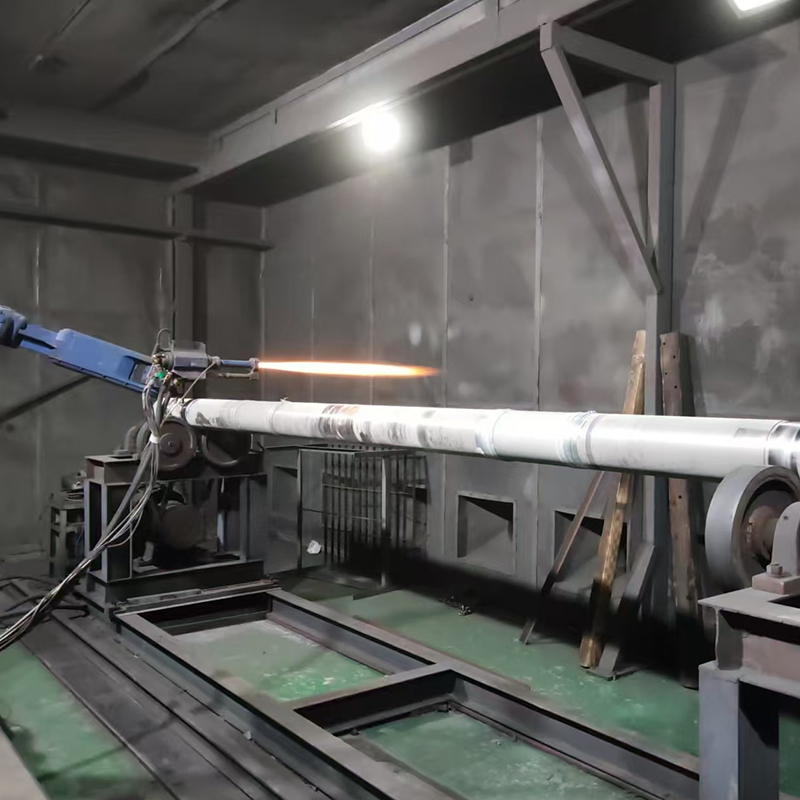
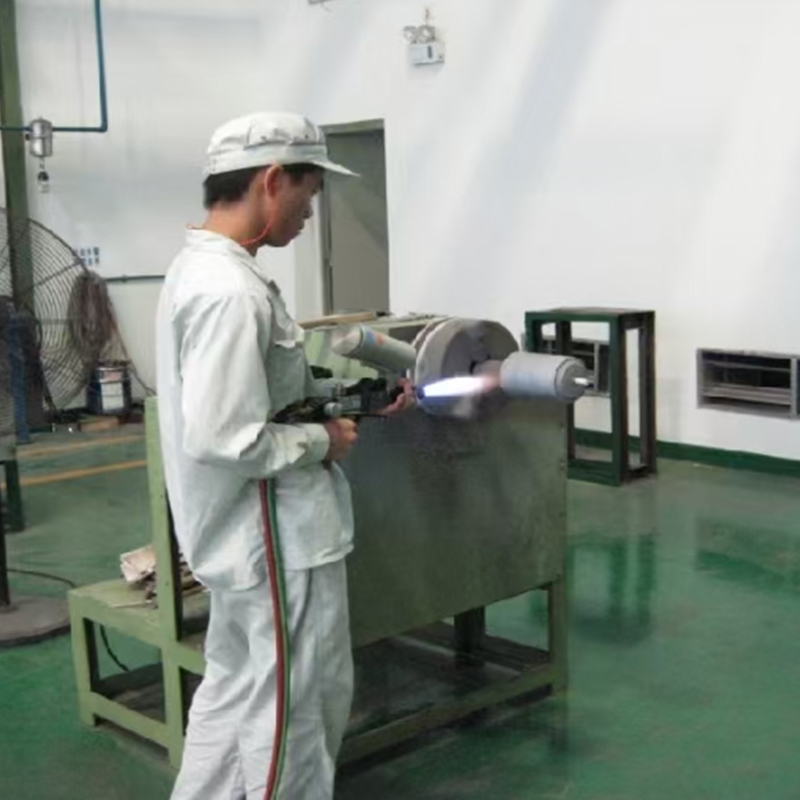
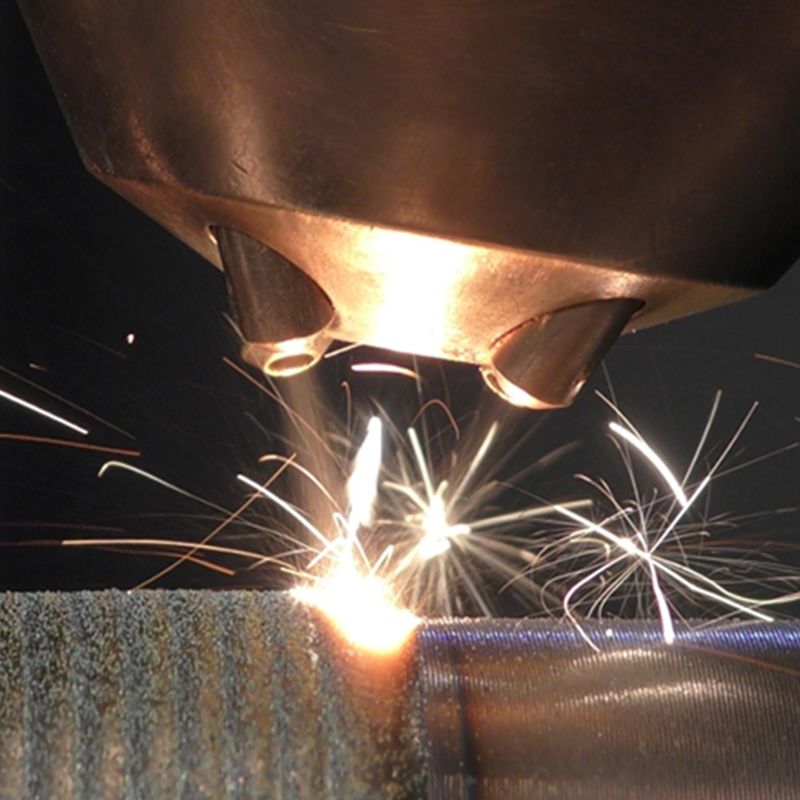
Tungsten carbide (WC) is a ceramic-metallic compound with a Vickers hardness ranging from 1,400 to 1,800 HV, compared to hardened tool steel at roughly 700–900 HV. When applied as a thermal spray or HVOF (High Velocity Oxygen Fuel) coating, the particles bond metallurgically to the substrate, forming a dense, low-porosity layer typically 0.1–0.5 mm thick.
The matrix binder — commonly cobalt (Co) or nickel (Ni) — gives the coating toughness to resist impact while the carbide grains resist sliding and abrasive wear. The result is a surface that resists scratching, gouging, and erosion in conditions that destroy conventional hard chrome or ceramic coatings.
Key Mechanical Properties
| Property | WC-Co Coating | Hard Chrome | Alumina Ceramic |
|---|---|---|---|
| Hardness (HV) | 1,400–1,800 | 900–1,100 | 1,400–1,600 |
| Porosity (%) | <1 | 2–5 | 3–8 |
| Bond Strength (MPa) | >70 | Metallurgical | 35–55 |
| Impact Resistance | High | Medium | Low |
Abrasion Resistant Coating: How It Stops Surface Degradation
Abrasive wear occurs when hard particles — sand, mineral slurry, metal fines — slide or impact against a softer surface, cutting micro-grooves and removing material. An abrasion resistant coating must be harder than the abrasive particles it encounters. Silica sand, one of the most common industrial abrasives, has a Mohs hardness of about 7 (roughly 1,100 HV). Tungsten carbide coating at 1,400–1,800 HV is significantly harder, meaning the abrasive cannot penetrate or groove the surface effectively.
In slurry pump testing, components coated with WC-Co HVOF coatings showed wear rates 8× lower than uncoated carbon steel under identical conditions using 300-micron silica slurry at 3 m/s. This translates directly to extended maintenance intervals and reduced part replacement costs.
Common Abrasion Modes Addressed
- Two-body abrasion: A hard surface sliding directly against the coated part (e.g., seal contact zones).
- Three-body abrasion: Loose abrasive particles trapped between two surfaces (e.g., pump impellers, conveyor bearings).
- Erosive wear: High-velocity particle impact at an angle, common in pneumatic conveying and jet erosion.
- Fretting: Micro-motion wear at contact interfaces, relevant to press-fit assemblies and vibrating components.
Corrosion-Resistant Coating: Protection in Chemically Aggressive Environments
While tungsten carbide itself is chemically stable, the cobalt binder in standard WC-Co coatings can be vulnerable to acidic or chloride-rich environments. To address this, WC-CrC-Ni (tungsten carbide–chromium carbide–nickel) formulations are used as corrosion-resistant coatings, providing passive oxide film protection similar to stainless steel while maintaining near-equivalent hardness.
In offshore oil and gas applications, WC-CrC-Ni coated valve stems tested in 3.5% NaCl solution (simulating seawater) showed no measurable corrosion after 1,000 hours of salt spray exposure, compared to significant pitting on hard-chrome-plated equivalents after just 200 hours.
Binder Selection by Environment
| Environment | Recommended Binder | Typical Application |
|---|---|---|
| Dry abrasion, neutral pH | WC-Co (12–17% Co) | Mining crushers, conveyor rolls |
| Mild acid / seawater | WC-CrC-Ni | Marine valves, chemical pumps |
| High temperature (>500°C) | WC-Ni or CrC-NiCr | Exhaust components, furnace rolls |
| Strong acid (pH <3) | WC-Co/Cr with sealer | Acid slurry pipelines |
Wear-Resistant Bushing: Extending Life at High-Load Contact Zones
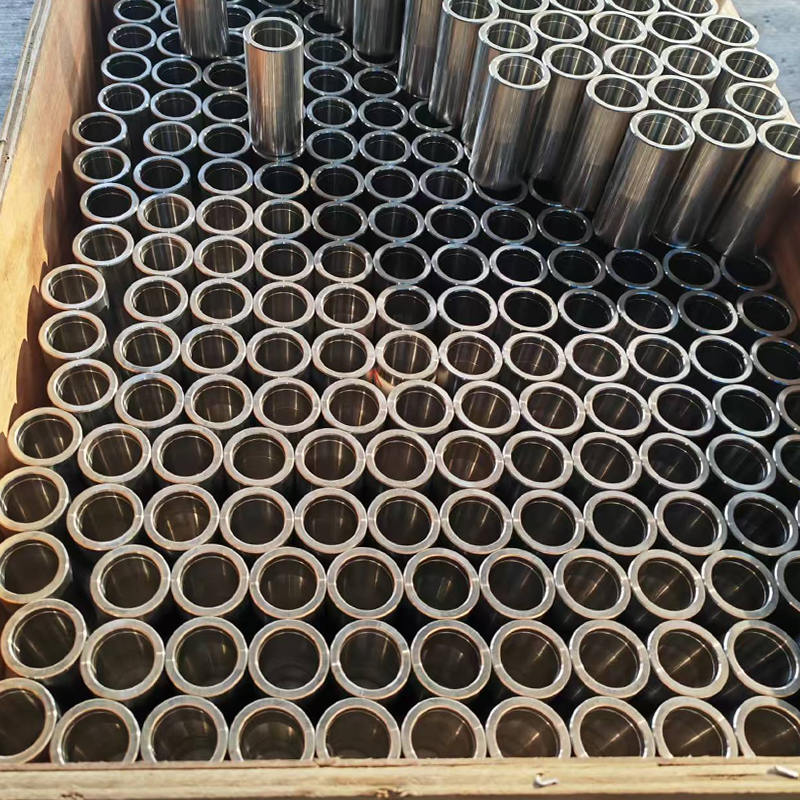
A wear-resistant bushing is a cylindrical bearing component designed to reduce friction and accommodate relative motion between a shaft and housing. In heavy equipment — excavators, drill rigs, press machines — uncoated steel bushings can fail in as little as 500–1,000 operating hours under combined radial load and contaminated lubrication.
Applying a tungsten carbide coating to the inner bore and outer diameter of a bushing delivers multiple simultaneous benefits. The hardened surface resists scoring from embedded abrasive particles, maintains tighter dimensional tolerances over service life, and reduces friction coefficient from approximately 0.15 (steel-on-steel) to 0.05–0.08 depending on surface finish and lubrication conditions.
Performance Comparison: Coated vs. Uncoated Bushings
- A Caterpillar 390F excavator boom pin bushing coated with WC-Co averaged 4,200 hours before replacement, vs. 900 hours for OEM bronze bushings in identical sandy soil conditions.
- Coated bushings in steel rolling mill guide assemblies maintained bore diameter within ±0.02 mm after 6 months of production, eliminating weekly shimming adjustments.
- In hydraulic cylinder pivot bushings, tungsten carbide coatings eliminated fretting corrosion that previously caused cylinder misalignment failures in offshore crane applications.
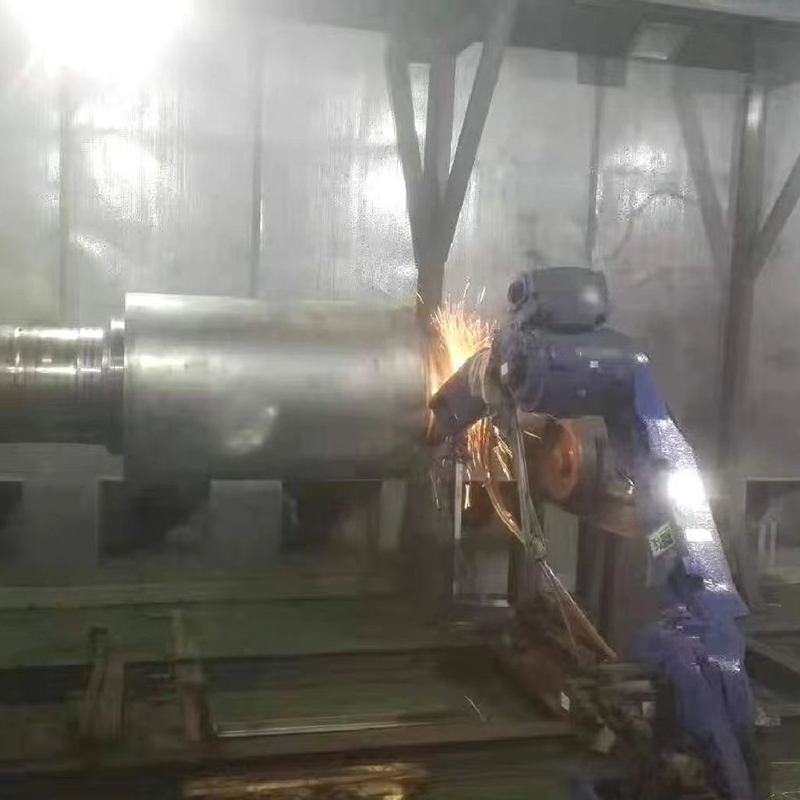
Surface finish after coating is critical — bushings are typically ground and lapped post-coating to Ra 0.2–0.4 µm to ensure proper hydrodynamic lubrication film formation and prevent accelerated wear-in of mating shafts.
Wear-Resistant Plunger: Sealing Integrity Under Cyclic Pressure
A wear-resistant plunger must maintain precise surface geometry through millions of reciprocating cycles while sealing against high-pressure fluid. In hydraulic and high-pressure pump systems, plunger wear directly causes seal leakage, pressure loss, and fluid contamination — all of which result in system inefficiency and potential environmental violations.
Tungsten carbide coated plungers are now standard in triplex and quintuplex mud pumps used in oil and gas drilling, where drilling fluid containing barite (BaSO₄) and rock cuttings acts as a continuous abrasive slurry. Field data from North Sea drilling operations shows WC-coated plungers averaging 400–600 hours of service vs. 80–120 hours for chrome-plated steel plungers under identical conditions.
Critical Plunger Coating Specifications
- Coating thickness: 0.25–0.40 mm is standard for plungers; thinner coatings risk through-coating wear, while thicker coatings increase residual stress risk.
- Surface finish: Ground to Ra 0.1–0.2 µm for packing seal compatibility; rougher surfaces accelerate elastomeric seal wear.
- Substrate preparation: Grit blasting to Sa 2.5 cleanliness and Ra 4–6 µm anchor profile before spraying ensures bond strength exceeding 70 MPa.
- Coating integrity testing: Dye penetrant inspection and dimensional verification are required after grinding to confirm no micro-cracks or delamination zones.
In water jet cutting systems operating at pressures up to 4,000 bar, tungsten carbide plungers have demonstrated consistent sealing performance across over 10 million cycles without measurable diameter loss, a benchmark unachievable with any electroplated coating.
Application Methods: HVOF vs. Plasma Spray vs. Cold Spray
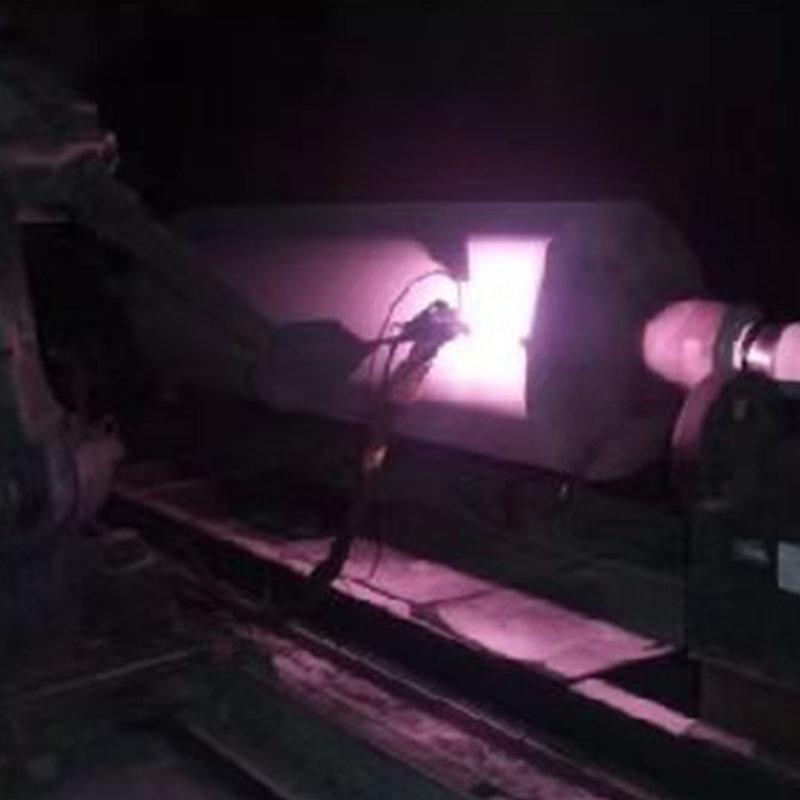
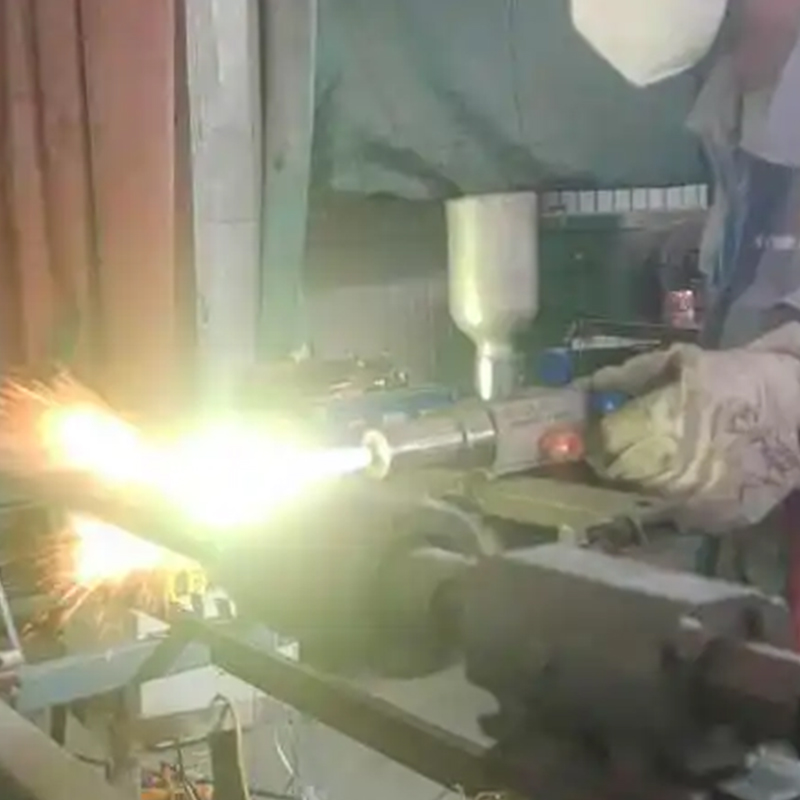
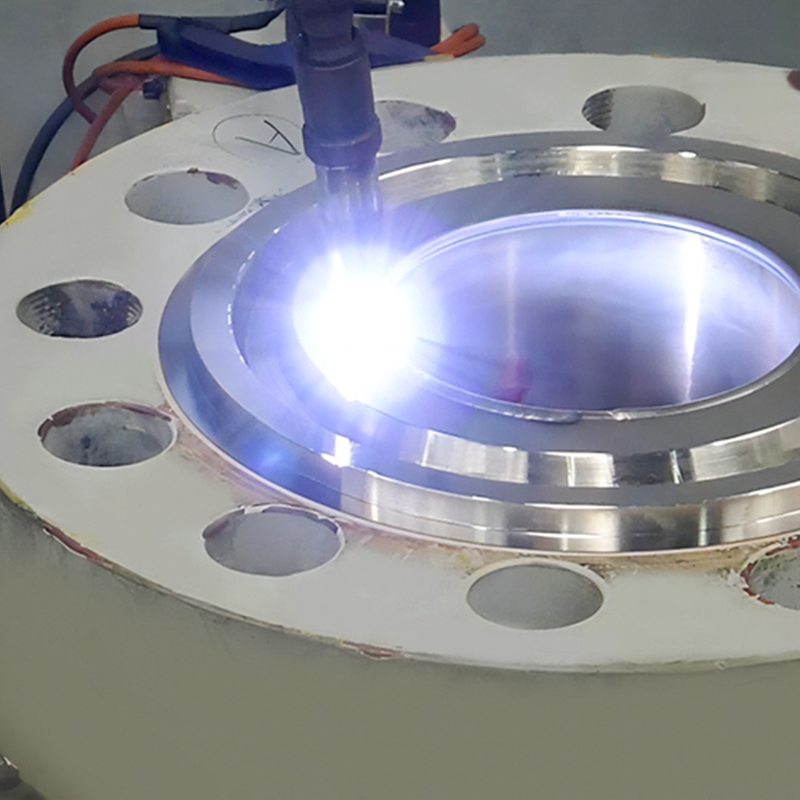
The deposition method determines coating density, hardness, and adhesion. For tungsten carbide coatings on critical wear components, HVOF (High Velocity Oxygen Fuel) thermal spraying is the preferred technique because it produces the lowest porosity (<1%) and highest bond strength of any spray process.
| Method | Porosity | Hardness (HV) | Best For |
|---|---|---|---|
| HVOF | <1% | 1,400–1,800 | Plungers, bushings, valve seats |
| Plasma Spray (APS) | 3–8% | 900–1,200 | Large-area, lower-stress parts |
| Cold Spray | <2% | 1,000–1,400 | Heat-sensitive substrates |
| HVAF (High Velocity Air Fuel) | <0.5% | 1,500–1,800 | Corrosion-critical components |
HVAF has emerged as a strong alternative to HVOF for corrosion-resistant applications, as lower flame temperatures reduce cobalt oxidation in the binder phase, preserving the alloy's electrochemical passivity in aggressive media.
Industries That Rely on Tungsten Carbide Coated Components
Tungsten carbide coatings are not limited to a single industry. Their combination of abrasion resistance, corrosion resistance, and dimensional stability makes them relevant wherever components face aggressive service conditions:
- Oil and gas: Mud pump plungers, drill bit stabilizers, gate valve seats, and wellhead components subjected to abrasive drilling fluids at pressures exceeding 1,000 bar.
- Mining and mineral processing: Cyclone liners, slurry pump impellers, and crusher wear parts where silica and mineral abrasives cause rapid material loss.
- Hydraulics and pneumatics: Cylinder rods, bushings, and piston components requiring tight tolerances and seal compatibility through extended duty cycles.
- Pulp and paper: Roll surfaces, doctor blades, and press section components operating in wet, chemically active environments containing wood fibers and bleaching agents.
- Aerospace and defense: Landing gear components, actuator rods, and rotor hubs where weight savings and corrosion resistance are both critical requirements.
Cost-Benefit Consideration: Is Tungsten Carbide Coating Worth It?
The upfront cost of HVOF tungsten carbide coating is 3–6× higher than hard chrome plating for equivalent component sizes. However, total cost of ownership tells a different story. When factoring in part replacement frequency, downtime costs, and labor, coated components consistently deliver better economics in high-wear environments.
In one documented case from a cement plant, replacing uncoated steel fan blade leading edges with WC-Co HVOF-coated equivalents increased replacement intervals from 3 months to 26 months, reducing annual maintenance costs by 62% despite the higher per-unit coating cost. Similar ROI profiles appear consistently across slurry handling, hydraulic systems, and rotating equipment applications.
Additionally, as environmental regulations tighten globally, tungsten carbide coatings serve as the primary replacement technology for hexavalent chromium (Cr⁶⁺) electroplating, which is now restricted under REACH regulations in the EU and increasingly regulated in North America and Asia. This regulatory trajectory makes WC coatings not just a performance choice but a compliance-forward investment.

 TOP
TOP