
 ENG
ENG
 English
 عربى
عربى Español
 中文简体
中文简体
Consistent, high-quality thermal spray coatings depend heavily on how well the powder feedstock is mixed and blended before it ever reaches the spray gun. Variations in particle distribution, composition ratios, or moisture content can lead to uneven coating density, poor adhesion, and inconsistent hardness across a sprayed surface. Thermal spray mixing and blending equipment components are designed to solve this problem, ensuring powders are uniformly combined and properly conditioned before feeding into thermal spray systems such as HVOF, plasma, or combustion spray guns. This article explains how these components work and what to look for when selecting equipment for a thermal spray operation.
Content
- 1 Why Proper Mixing and Blending Matters in Thermal Spray Processes
- 2 Core Components of Thermal Spray Mixing and Blending Systems
- 3 How the Mixing and Blending Process Works
- 4 Key Advantages of Purpose-Built Blending Equipment
- 5 Types of Mixing and Blending Equipment Configurations
- 6 Selecting the Right Mixing and Blending Equipment
- 7 Maintaining Equipment Performance Over Time
- 8 Final Thoughts on Thermal Spray Mixing and Blending Equipment
Why Proper Mixing and Blending Matters in Thermal Spray Processes
Thermal spray coatings are only as good as the feedstock material feeding the spray system. Many advanced coatings require blended powders combining multiple materials, such as metal-ceramic composites or carbide-metal matrix powders, to achieve specific hardness, wear resistance, or thermal properties. If these powders are not thoroughly and uniformly mixed before spraying, the resulting coating can exhibit inconsistent composition from one area to another, undermining the very properties the coating was designed to provide.
Beyond composition uniformity, proper blending also affects flowability during the spraying process itself. Powders with inconsistent particle size distribution or clumping tendencies can cause irregular feed rates, leading to uneven coating thickness and increased porosity. This makes mixing and blending equipment a foundational step in achieving repeatable, high-quality thermal spray results.
Core Components of Thermal Spray Mixing and Blending Systems
A complete mixing and blending system typically consists of several integrated components, each performing a specific function in preparing powder feedstock for thermal spray application.
Mixing Vessels and Blending Chambers
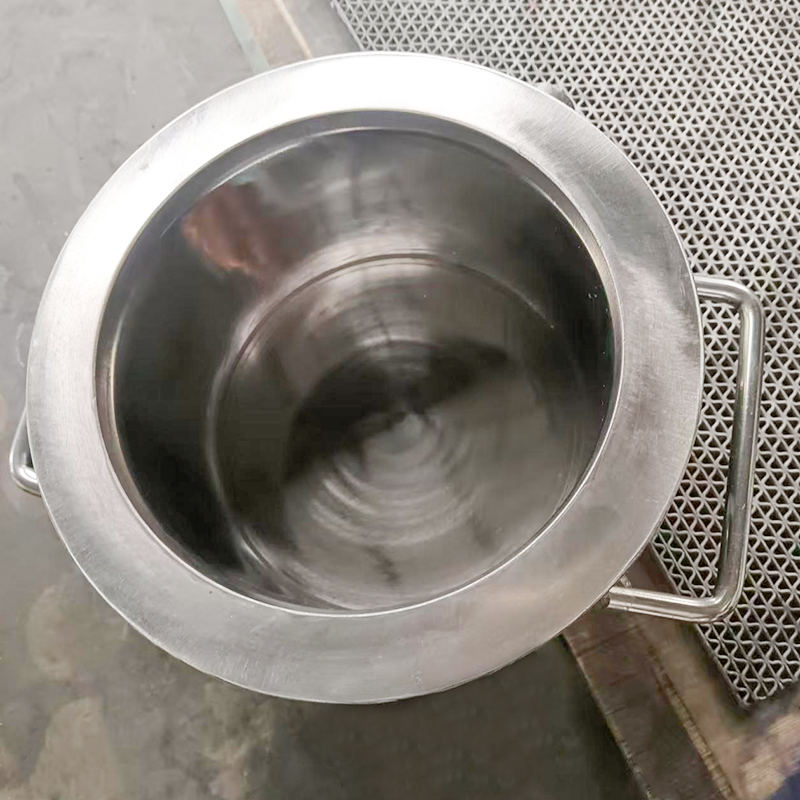
The mixing vessel is the core chamber where raw powder materials are combined. These vessels are often designed with specific internal geometries, such as V-shaped or double-cone configurations, that promote thorough mixing through repeated folding and tumbling of the powder as the vessel rotates. The goal is to achieve homogeneous distribution without introducing excessive mechanical stress that could fracture delicate powder particles.
Agitation and Tumbling Mechanisms
Internal agitation mechanisms, including rotating blades, baffles, or rotating drum designs, physically move powder particles throughout the mixing cycle to prevent settling or stratification by particle size or density. The speed and duration of agitation must be carefully controlled, since excessive mixing time or speed can cause particle segregation rather than improved uniformity, particularly when blending materials with significantly different densities.
Drying and Moisture Control Units
Moisture content significantly affects powder flowability and spray consistency, so many blending systems incorporate integrated drying components, such as heated jackets or vacuum drying chambers, to remove residual moisture before or during the mixing process. This is particularly important for hygroscopic powder materials that readily absorb ambient humidity during storage.
How the Mixing and Blending Process Works
The typical workflow begins with raw powder materials being measured according to precise formulation ratios, then loaded into the mixing vessel. As the vessel rotates or internal agitators engage, particles are continuously folded and redistributed, gradually breaking down loose agglomerates and dispersing different material components evenly throughout the batch.
During this cycle, many systems incorporate real-time monitoring through sensors that track parameters such as mixing time, temperature, and sometimes particle size distribution via inline sampling. Once the target uniformity is achieved, the blended powder is discharged into storage containers or fed directly into a connected thermal spray feed system, depending on the level of process integration.
| Process Stage | Function | Key Component Involved |
| Loading and Measuring | Precise formulation ratios established | Feed hoppers, weighing systems |
| Mixing and Agitation | Uniform particle distribution achieved | Mixing vessel, tumbling mechanism |
| Moisture Conditioning | Residual moisture removed for flowability | Drying jackets, vacuum systems |
| Discharge and Transfer | Blended powder moved to storage or spray feed | Discharge valves, transfer lines |
Key Advantages of Purpose-Built Blending Equipment
- Improved coating consistency through uniform composition and particle distribution across every batch.
- Reduced material waste by minimizing rejected coatings caused by inconsistent feedstock quality.
- Better process repeatability, allowing operators to reliably reproduce specific coating properties batch after batch.
- Enhanced powder flowability, reducing feed system clogs and interruptions during spray operation.
- Flexibility to formulate custom powder blends tailored to specific coating performance requirements.
Types of Mixing and Blending Equipment Configurations
Different operational scales and powder characteristics call for different equipment configurations. Understanding these options helps facilities select equipment matched to their production volume and material requirements.
Batch Mixing Systems
Batch systems process a fixed quantity of powder per mixing cycle, offering precise control over formulation and mixing time for each batch. This configuration is well suited for operations requiring frequent formulation changes or smaller production volumes where flexibility outweighs the need for continuous throughput.
Continuous Blending Systems
Continuous systems feed raw materials in a steady stream through the mixing chamber, producing blended powder output without stopping between batches. These systems are typically favored in high-volume production environments where consistent formulation remains stable over long production runs.
Selecting the Right Mixing and Blending Equipment
Choosing appropriate equipment requires evaluating several practical factors specific to the powders being processed and the production environment they will operate within.
- Powder characteristics: Particle size, density differences between blended materials, and moisture sensitivity all influence which mixing mechanism will achieve the most uniform results.
- Production volume: Facilities with frequent formulation changes generally benefit from batch systems, while high-volume single-formulation operations may favor continuous blending equipment.
- Contamination control: Equipment should be easy to clean between formulation changes to prevent cross-contamination between different powder chemistries.
- Integration with feed systems: Compatibility with downstream thermal spray feed hoppers and delivery systems simplifies material handling and reduces manual transfer steps.
- Explosion and dust hazard considerations: Certain metal powders present combustion risks, requiring equipment designed with appropriate containment and venting safety features.
Maintaining Equipment Performance Over Time
Regular maintenance ensures mixing and blending equipment continues to produce consistent results as it accumulates operating hours. Internal mixing surfaces should be inspected periodically for wear or buildup that could affect mixing efficiency or introduce contamination into subsequent batches. Seals and gaskets on mixing vessels require routine checks to prevent moisture ingress or powder leakage, both of which can compromise blend quality and workplace cleanliness.
Calibrating weighing and measuring systems on a regular schedule also helps maintain formulation accuracy, since even small measurement drift can accumulate into meaningful composition inconsistencies over repeated production runs.
Final Thoughts on Thermal Spray Mixing and Blending Equipment
Thermal spray mixing and blending equipment components form the foundation for consistent, high-quality coating results by ensuring powder feedstock is uniformly combined and properly conditioned before spraying begins. Understanding how mixing vessels, agitation mechanisms, and moisture control systems work together helps operators select equipment suited to their specific powder characteristics and production needs. With proper equipment selection and ongoing maintenance, facilities can achieve the batch-to-batch consistency necessary for reliable thermal spray coating performance across demanding industrial applications.


 TOP
TOP