
 ENG
ENG
 English
 عربى
عربى Español
 中文简体
中文简体
Content
Why Ordinary Pipes Fail at Elevated Temperatures — and What Must Replace Them
Standard carbon steel pipe — the workhorse of industrial piping systems — begins to experience measurable strength degradation at temperatures above 300°C, and loses structural reliability for pressurized service above approximately 450°C without special consideration. Common thermoplastic pipes such as PVC and PP begin softening at temperatures as low as 60–80°C, making them entirely unsuitable for hot fluid service. As industrial processes in power generation, petrochemical refining, aerospace, semiconductor manufacturing, and metallurgy routinely involve fluids, gases, and thermal environments well above these thresholds, there is a substantial and technically demanding market for pipe systems engineered specifically to function reliably at elevated temperatures without creep failure, oxidation degradation, or loss of dimensional stability.
High-temperature resistant pipes are not a single product — they are a family of solutions spanning multiple material platforms, each with a distinct temperature capability range, mechanical performance profile, and manufacturing method suited to specific application environments. Understanding which material platform and manufacturing approach delivers reliable service in a given scenario requires knowledge of both the pipe's operating conditions and the engineering principles that govern each material's high-temperature behavior.
Material Platforms and Their Temperature Capability
High-temperature resistant piping materials can be organized into three principal platforms defined by their temperature capability ceiling and the mechanism through which that capability is achieved:
Alloy Steel and Stainless Steel
Chromium-molybdenum alloy steels (P9, P11, P22, P91, P92 grades per ASTM A335) form the backbone of high-temperature piping in power generation and petrochemical applications in the range of 400–650°C. The addition of chromium (typically 1–12%) provides oxidation resistance at elevated temperatures, while molybdenum additions enhance creep resistance — the slow, time-dependent deformation that occurs when metals are held under stress at temperatures above roughly half their melting point in absolute terms. Grade P91 (9Cr-1Mo-V) has become the industry standard for supercritical steam piping in modern power stations, offering significantly better creep strength than earlier low-alloy grades and allowing wall thickness reductions that reduce system thermal mass and stress concentration at fittings.
Austenitic stainless steels (316H, 321H, 347H) and nickel-base superalloys (Alloy 800H, Inconel 625, Haynes 230) extend temperature capability to the range of 700–1,100°C through solid-solution strengthening and precipitation-hardening mechanisms that maintain yield strength at temperatures where ferritic alloy steels have become too weak for pressurized service.
Ceramic and Refractory-Lined Pipe
For applications involving extremely high temperatures combined with abrasive or chemically aggressive media — such as flue gas desulfurization ducting, blast furnace gas lines, or hot cyclone overflow in cement production — a composite approach using a structural steel outer shell with a ceramic or refractory inner lining is employed. Alumina (Al₂O₃), silicon carbide (SiC), and castable refractory cements provide inner surface temperature capabilities of 1,000–1,700°C while the steel outer shell carries structural and pressure loads. The liner isolates the steel from the thermal and chemical environment, operating as a sacrificial wear and thermal barrier that can be replaced when depleted without replacing the structural shell.
High-Temperature Thermoplastic and Fluoropolymer Pipe
For chemical process applications requiring corrosion resistance rather than extreme temperature capability, high-performance thermoplastics such as PVDF (Polyvinylidene fluoride, continuous service to 150°C), PFA (Perfluoroalkoxy alkane, to 260°C), and PEEK (Polyether ether ketone, to 260°C dry) provide a combination of chemical inertness and moderate elevated temperature capability that metallic pipes cannot offer for aggressive chemical service. These materials are used in semiconductor wet processing, pharmaceutical manufacturing, and chemical dosing systems where the combination of chemical purity and thermal resistance is the primary specification driver.
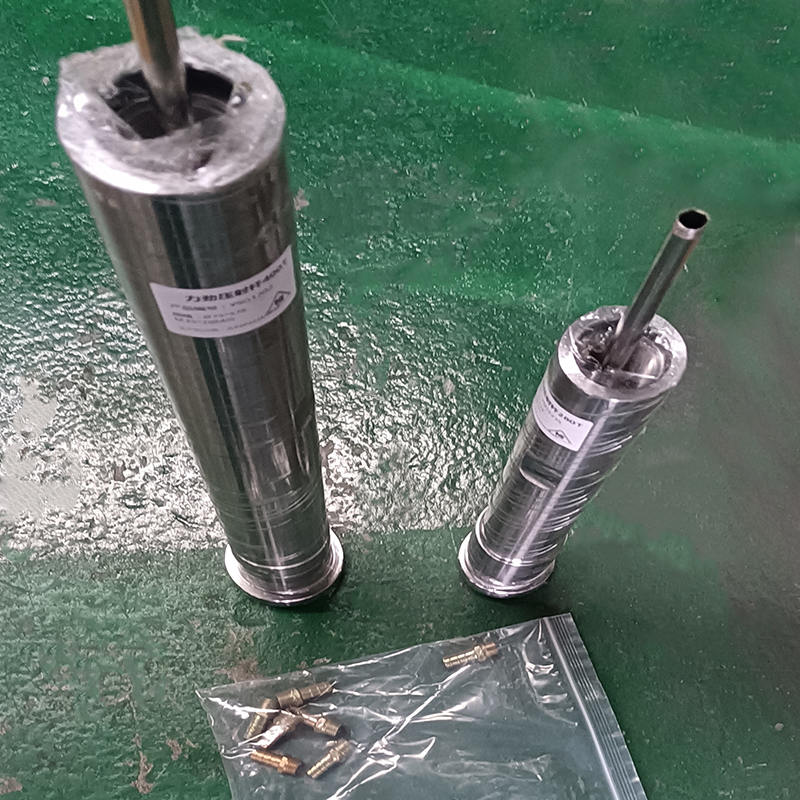
Manufacturing Processes: How High-Temperature Capability Is Built In
The manufacturing process for high-temperature metallic piping — particularly alloy steel and stainless steel products — involves several steps that directly determine the pipe's elevated-temperature performance and are substantially more demanding than those used for standard carbon steel pipe production.
- Seamless extrusion and piercing: High-temperature alloy pipes are predominantly produced as seamless products via the rotary piercing (Mannesmann) process or extrusion over a mandrel. Seamless construction eliminates the longitudinal weld seam that represents a potential weak point in high-temperature pressurized service, where creep and thermal cycling stresses concentrate preferentially at weld heat-affected zones. The solid billet is heated to forming temperature, pierced to create a hollow shell, and then elongated and wall-reduced to final dimensions through plug rolling or stretch-reducing mill passes.
- Controlled chemistry and ladle metallurgy: The alloy chemistry of grades such as P91 and P92 is specified within very narrow ranges for vanadium, niobium, nitrogen, and residual element content that must be maintained to achieve the designed creep strength after the specified heat treatment cycle. Electric arc furnace or basic oxygen furnace production with ladle refining and vacuum degassing is required to achieve these tight compositional tolerances consistently.
- Normalizing and tempering heat treatment: For P91 and similar martensitic grades, the final heat treatment sequence — normalizing at approximately 1040–1080°C followed by tempering at 730–800°C — develops the tempered martensite microstructure that is the source of the grade's creep resistance. Deviations from the specified time-temperature parameters during this step directly degrade the long-term creep performance of the pipe, making process documentation and verification critical to product quality.
- Nondestructive examination: High-temperature piping for power and process plant applications is subjected to comprehensive nondestructive testing including ultrasonic wall thickness measurement, eddy current or magnetic particle inspection for surface defects, and hydrostatic pressure testing to verify integrity before dispatch. These tests are not optional quality checks — they are mandatory requirements under ASME B31.1, EN 13480, and equivalent piping standards that govern power and process plant design.
Critical Application Scenarios Where High-Temperature Pipe Is Non-Negotiable
The following industrial scenarios represent the primary application contexts where high-temperature resistant piping is not an option to be evaluated against standard alternatives, but a technical necessity:
- Supercritical and ultra-supercritical steam power plants: Modern coal and biomass power stations operate with main steam conditions of 600–650°C at 25–35 MPa. The main steam lines, hot reheat lines, and headers operating at these conditions require P91, P92, or austenitic stainless steel pipe to resist the creep and oxidation that would rapidly degrade carbon or low-alloy steel pipe at these temperatures. A single main steam pipe failure at these conditions represents a catastrophic safety event, making material specification and fabrication quality a life-safety matter.
- Petroleum refinery furnace transfer lines and vacuum unit piping: Crude oil refinery process units operate at temperatures of 350–500°C across fired heater transfer lines, vacuum tower overhead systems, and catalytic reformer feed/effluent systems. Chrome-moly alloy piping is the standard specification for these services, where sulfidic corrosion resistance at temperature is an additional requirement beyond mechanical strength.
- Industrial furnace and kiln atmosphere ducting: Rotary kiln processes in cement, lime, and titanium dioxide production involve gas streams at 800–1,200°C that must be conveyed to cyclone preheaters, heat recovery exchangers, and pollution control systems. Ceramic-lined ducting and high-alloy steel components are required throughout these gas circuits.
- Semiconductor diffusion and CVD furnace systems: Silicon wafer fabrication requires process gases to be delivered at controlled temperatures of 700–1,100°C in diffusion, oxidation, and chemical vapor deposition furnaces. High-purity quartz tubes and alumina process tubes provide the required combination of thermal stability, chemical purity, and dimensional precision for these precision manufacturing environments.
- Aerospace engine test facility and turbine component cooling systems: Gas turbine test cells and component cooling air supply systems operate with compressed air at temperatures up to 600°C. Inconel and other nickel alloy piping components are specified for these applications to resist the combination of high temperature, high pressure, and oxidizing atmosphere that would rapidly degrade lower-grade materials.
Across all these applications, the common thread is that the consequences of piping failure — whether through sudden burst, creep rupture, or progressive oxidation thinning — are not merely operational disruptions but potential safety incidents with serious consequences for personnel and facilities. The engineering investment in correctly specified, properly manufactured, and thoroughly inspected high-temperature resistant piping is therefore justified not only by operational continuity but by the fundamental safety obligations of industrial plant ownership and operation.

 TOP
TOP