
 ENG
ENG
 English
 عربى
عربى Español
 中文简体
中文简体
Content
- 1 Why Turbine Blade Manufacturing Is One of the Most Demanding Engineering Challenges
- 2 Superalloy Selection: The Material Foundation of Blade Performance
- 3 Investment Casting: The Core Manufacturing Process for Turbine Blades
- 4 Cooling System Design: Enabling Higher Turbine Inlet Temperatures
- 5 Thermal Barrier Coatings: The Last Line of Defense Against Heat
- 6 Precision Machining and Final Dimensional Finishing
- 7 Quality Control and Non-Destructive Testing Requirements
- 8 Emerging Manufacturing Technologies Shaping the Future of Turbine Blade Production
Why Turbine Blade Manufacturing Is One of the Most Demanding Engineering Challenges
Thermal power turbine blades operate under conditions that push the limits of materials science and precision manufacturing. In a modern coal-fired or gas-fired power plant, high-pressure turbine blades are exposed to steam or combustion gas temperatures exceeding 1,400°C while spinning at 3,000–3,600 RPM, generating centrifugal stresses equivalent to carrying a load of 20 tonnes per blade. At the same time, they must maintain dimensional tolerances within ±0.05 mm across complex three-dimensional airfoil geometries. The combination of extreme thermal gradients, mechanical fatigue, oxidation, and corrosion means that turbine blade manufacturing is not a single process — it is a precisely sequenced chain of material selection, forming, machining, coating, and testing disciplines, each of which directly determines plant efficiency, reliability, and service life.
The global turbine blade manufacturing market was valued at over $5.8 billion in 2023, with thermal power applications representing the largest share. Continuous pressure to improve thermodynamic efficiency — every 10°C increase in turbine inlet temperature can improve combined-cycle plant efficiency by approximately 0.3–0.5 percentage points — drives relentless innovation in blade manufacturing technology.
Superalloy Selection: The Material Foundation of Blade Performance
Nickel-based superalloys are the dominant material class for thermal power turbine blades, accounting for over 80% of high-temperature turbine blade applications. These alloys are engineered to retain tensile strength, creep resistance, and oxidation resistance at temperatures where conventional steel has long since lost structural integrity. Key alloying elements include chromium (12–20%) for oxidation resistance, aluminum and titanium for γ' (gamma prime) precipitation hardening, cobalt for solid-solution strengthening, and rhenium (3–6%) in advanced single-crystal grades to suppress high-temperature creep.
Polycrystalline, Directionally Solidified, and Single-Crystal Grades
Turbine blade superalloys are classified by their grain structure, which directly determines creep resistance at elevated temperature. Conventionally cast polycrystalline blades (e.g., IN738, GTD-111) contain random grain boundaries that become weak points under sustained high-temperature stress — acceptable for lower-stage blades where temperatures are moderate. Directionally solidified (DS) blades eliminate transverse grain boundaries by controlling solidification direction using a thermal gradient furnace, extending creep life by 2–3× compared to equiaxed equivalents. Single-crystal (SX) blades — used in the first and second stages of high-pressure turbines — have no grain boundaries at all, delivering the highest creep rupture life and thermal fatigue resistance. Alloys such as CMSX-4, René N6, and TMS-238 represent the current state of the art in single-crystal blade materials, with operating temperatures approaching 1,100°C metal temperature.
Investment Casting: The Core Manufacturing Process for Turbine Blades
Investment casting (lost-wax casting) is the primary manufacturing process for thermal power turbine blades, chosen because it can produce complex, near-net-shape geometries — including intricate internal cooling channels — that are impossible or economically unfeasible to achieve by machining alone. The investment casting process for turbine blades involves several tightly controlled stages:
- Ceramic core fabrication: For cooled blades, ceramic cores replicating the internal cooling passage geometry are manufactured first — typically from silica or alumina-based ceramic — using injection molding. Core dimensions are critical; positional tolerances within ±0.1 mm must be maintained throughout the casting process to ensure consistent wall thickness in the finished blade.
- Wax pattern injection: Wax is injected around the ceramic core to form the external blade geometry. For single-crystal blades, the wax pattern includes a starter seed and spiral grain selector at the root end that initiates and selects the correct crystallographic orientation during solidification.
- Shell building: The wax assembly is repeatedly dipped in ceramic slurry and coated with refractory stucco (zircon, alumina, or mullite) in 8–12 layers over several days. The resulting ceramic shell is strong enough to contain molten superalloy at pouring temperatures above 1,500°C.
- Dewaxing and firing: The wax is melted out in an autoclave, and the ceramic shell is fired at 900–1,100°C to achieve full strength and remove residual organic binders before casting.
- Directional solidification casting: Superalloy melt is poured into the preheated shell in a vacuum induction furnace. For DS and SX blades, the mold is withdrawn from the furnace hot zone at a precisely controlled rate (3–10 mm/min) to produce a controlled solidification front that eliminates unwanted grain boundaries.
- Shell and core removal: After solidification, the ceramic shell is knocked off mechanically and the internal ceramic core is removed by chemical leaching in hot sodium hydroxide or potassium hydroxide solution, leaving hollow internal cooling passages intact.
Cooling System Design: Enabling Higher Turbine Inlet Temperatures
Modern thermal power turbine blades operate at gas temperatures that exceed the melting point of the superalloy itself — a paradox resolved through sophisticated internal and external cooling systems. Cooling air, bled from the compressor at 4–12% of total airflow, is fed through the blade root and circulated through a network of internal passages before being discharged through film cooling holes on the blade surface and trailing edge slots.
Internal Convective Cooling and Impingement Jets
Internal cooling passages use serpentine channels with turbulence promoters (trip strips and pin fins) to maximize convective heat transfer between blade metal and cooling air. Impingement jets — arrays of small holes in an inner insert — direct high-velocity cooling air onto the inner wall of the leading edge, where thermal loads are highest. Advanced blades incorporate 20–60 individual internal passages, each sized and positioned through computational fluid dynamics (CFD) analysis to achieve target metal temperatures within ±15°C across the entire blade surface.
Film Cooling Hole Drilling
Film cooling holes — typically 0.3–0.8 mm in diameter — are drilled through the blade wall at compound angles of 20–45° to create a protective film of cooler air along the external blade surface. A single high-pressure turbine blade may contain 50–200 individual film cooling holes. Drilling methods include electrical discharge machining (EDM) for straight holes and laser drilling or shaped-tube electrochemical machining (STEM) for shaped diffuser holes that spread the cooling film more effectively. Hole positioning accuracy within ±0.1 mm is required to avoid breakthrough into cooling passages or unacceptable wall thinning.
Thermal Barrier Coatings: The Last Line of Defense Against Heat
Thermal barrier coating (TBC) systems are applied to turbine blade surfaces to provide an additional temperature drop of 100–200°C across the ceramic top coat, reducing metal surface temperature and extending blade service life. A complete TBC system consists of two layers: a metallic bond coat and a ceramic top coat.
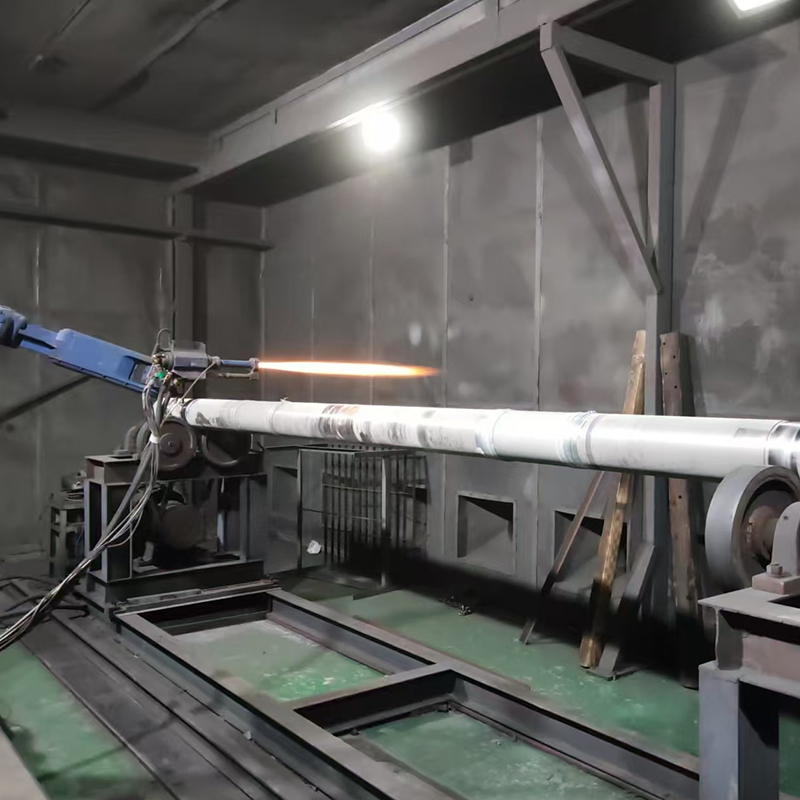
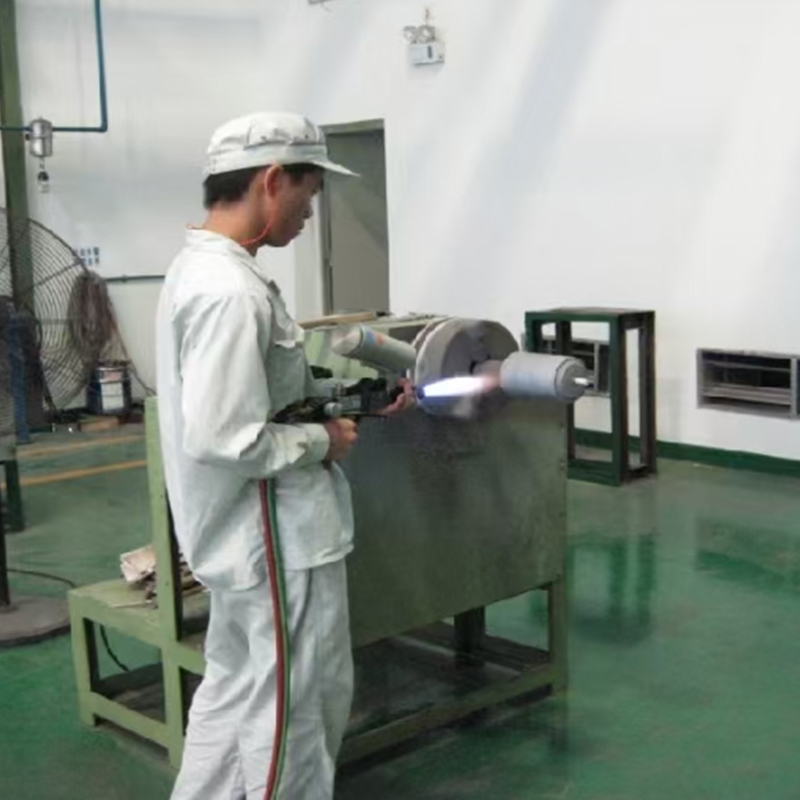
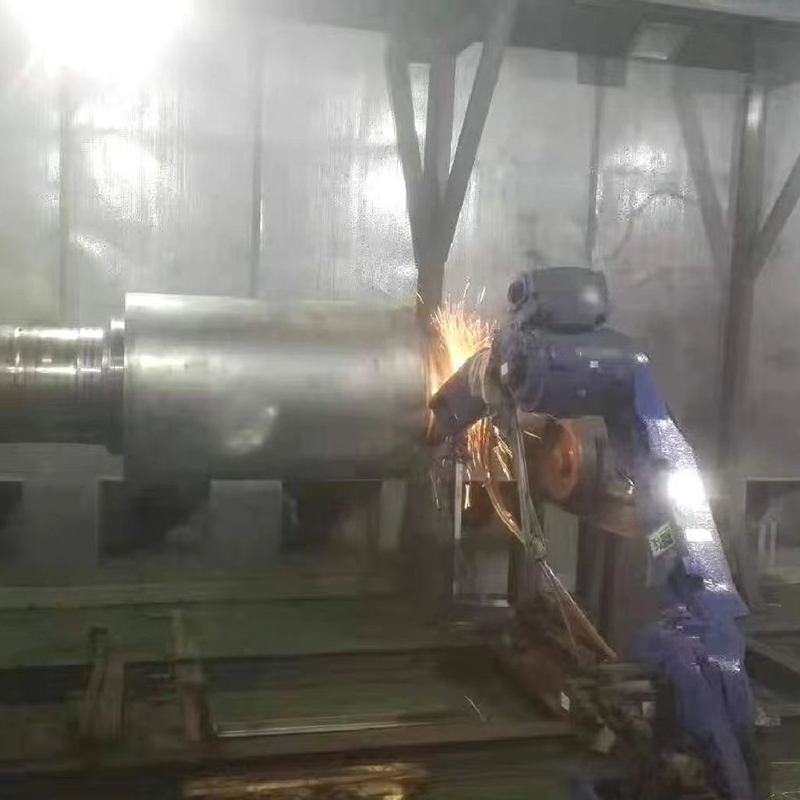
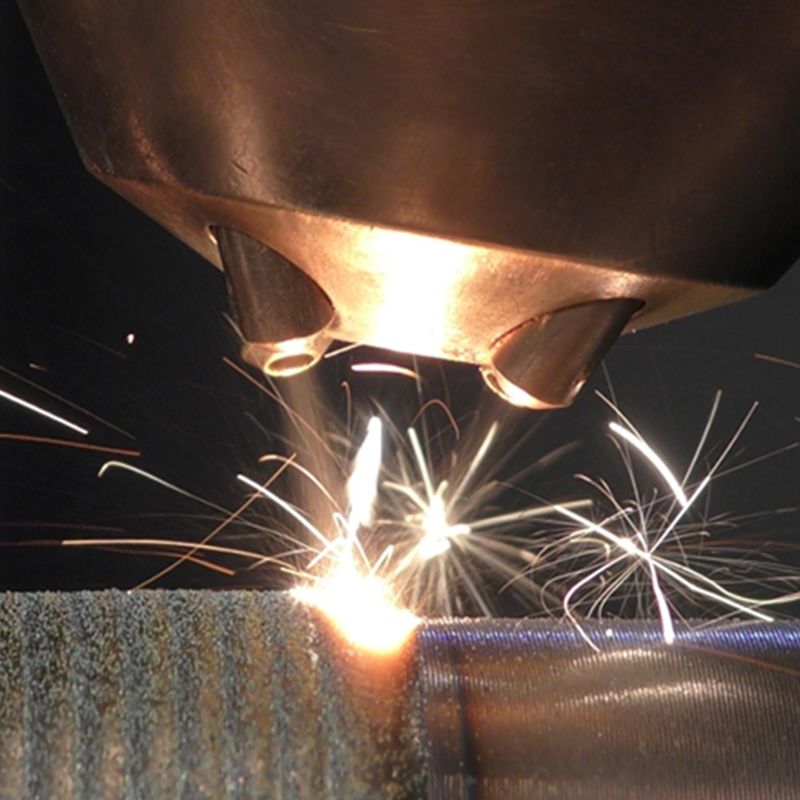
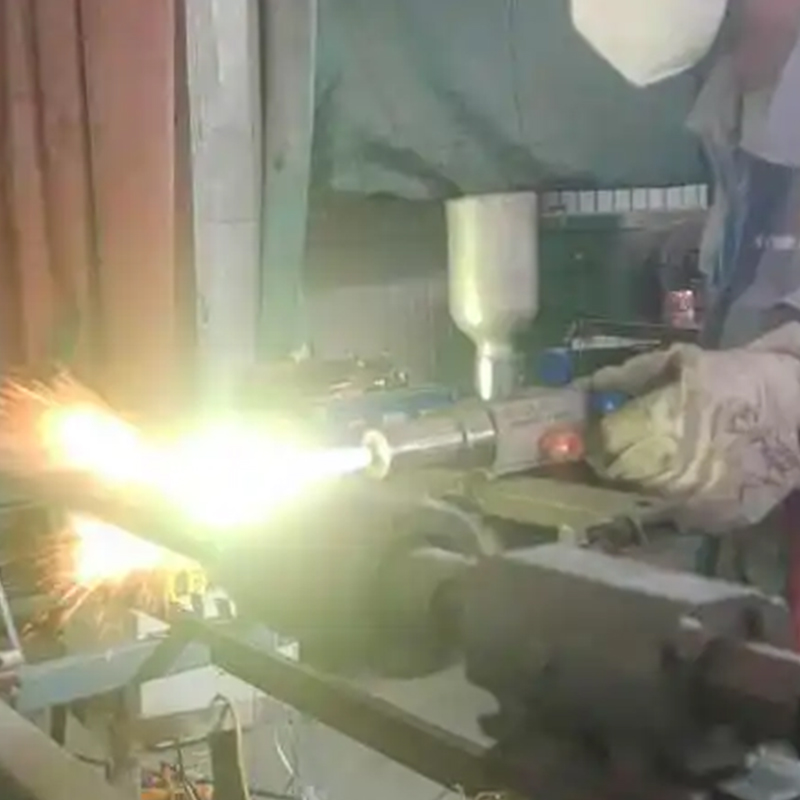
The bond coat — typically MCrAlY (where M = Ni, Co, or NiCo) applied by low-pressure plasma spray (LPPS) or high-velocity oxy-fuel (HVOF) thermal spray at 75–150 μm thickness — provides oxidation resistance and anchors the ceramic top coat by forming a thermally grown oxide (TGO) layer. The ceramic top coat, most commonly 7 wt% yttria-stabilized zirconia (YSZ) applied at 100–300 μm thickness, provides thermal insulation with a thermal conductivity of approximately 2.0 W/m·K, compared to ~12 W/m·K for the superalloy substrate. Application methods include air plasma spray (APS), which produces a splat microstructure tolerant of thermal cycling, and electron beam physical vapor deposition (EB-PVD), which produces a columnar grain structure with superior strain tolerance — preferred for high-stress rotating blades. TBC spallation life is a key blade retirement criterion; current industrial TBCs achieve 20,000–40,000 equivalent operating hours before replacement is required.
Precision Machining and Final Dimensional Finishing
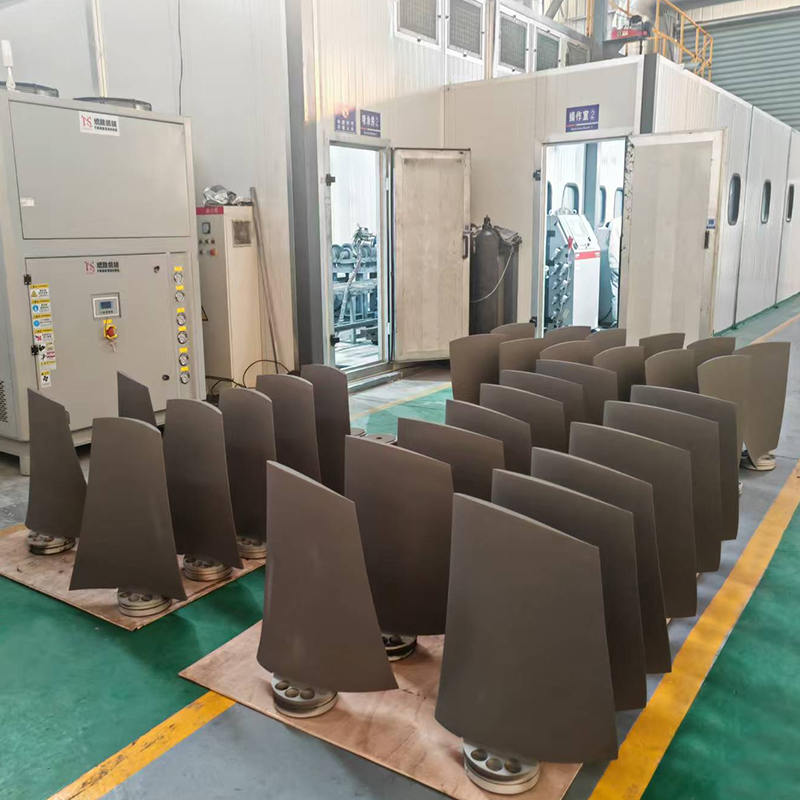
After casting and coating, turbine blades undergo precision machining to achieve final dimensional tolerances on the root attachment, platform faces, and tip shroud features. Five-axis CNC milling centers — equipped with CBN (cubic boron nitride) or coated carbide tooling — machine the fir-tree or dovetail root profiles that lock blades into turbine discs. Root profile tolerances are typically ±0.02 mm, with surface roughness Ra ≤ 0.8 μm to ensure proper stress distribution across the blade-disc interface under centrifugal loading.
Electrochemical machining (ECM) and electrochemical grinding (ECG) are used for finishing trailing edges and platform undercuts where conventional cutting tools cannot access or where the risk of surface work-hardening must be eliminated. Abrasive flow machining (AFM) is applied to smooth internal cooling passage surfaces, improving airflow uniformity and reducing pressure loss through the blade cooling circuit by 5–15% compared to as-cast surface finish.
Quality Control and Non-Destructive Testing Requirements
Given the consequences of blade failure — which can cause catastrophic turbine damage requiring months of plant outage — every thermal power turbine blade undergoes an extensive quality verification protocol before acceptance. The following testing methods are applied at various stages of manufacture:
| Test Method | What It Detects | Stage Applied |
|---|---|---|
| X-ray / CT Scanning | Internal porosity, wall thickness, core position | Post-casting |
| Fluorescent Penetrant Inspection (FPI) | Surface cracks, laps, cold shuts | Post-machining |
| Eddy Current Testing | Near-surface cracks, coating disbond | Post-coating |
| CMM Dimensional Inspection | Airfoil profile, root geometry, twist angle | Post-machining |
| Flow Testing | Cooling hole blockage, internal passage flow | Pre-assembly |
| Grain Structure Verification (EBSD) | Crystal orientation, stray grain detection | Post-casting (SX blades) |
Rejection rates for high-pressure single-crystal turbine blades can reach 20–40% across the full manufacturing sequence, reflecting the extreme difficulty of consistently achieving all acceptance criteria simultaneously. This high scrap rate is a primary driver of turbine blade cost and a major focus of ongoing process improvement efforts across the industry.
Emerging Manufacturing Technologies Shaping the Future of Turbine Blade Production
Several advanced manufacturing technologies are actively reshaping thermal power turbine blade production, driven by the need to reduce lead times, improve cooling effectiveness, and handle next-generation refractory superalloys that are difficult to process by conventional casting routes.
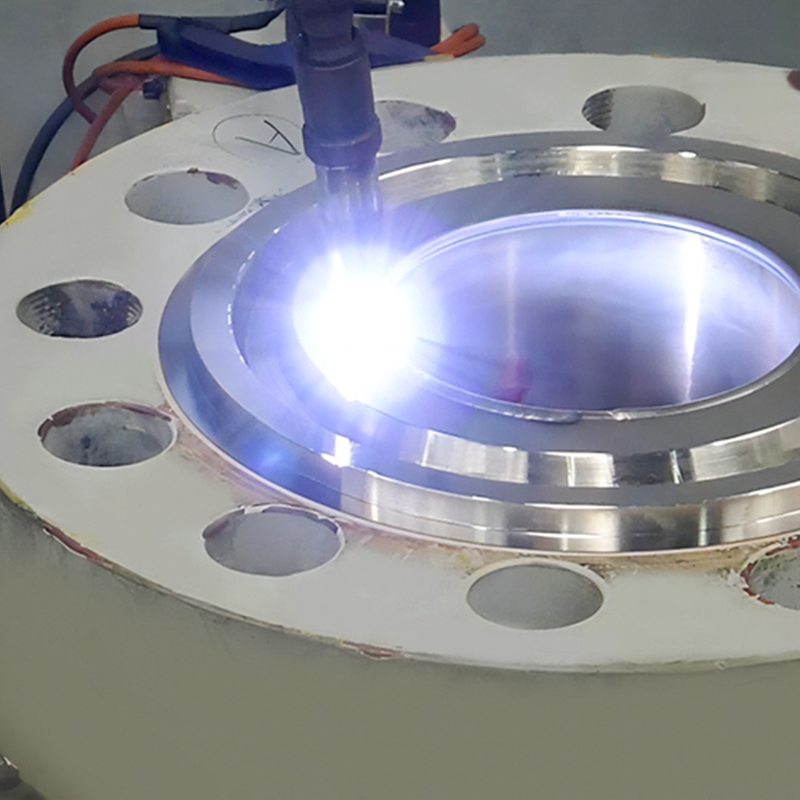
- Additive manufacturing (selective laser melting / directed energy deposition): While not yet capable of producing primary structural turbine blades at scale, AM is being used for rapid prototyping of blade designs, fabrication of ceramic core inserts, and repair of worn blade tips and trailing edges in-service — reducing repair cycle time from weeks to days.
- Advanced TBC compositions: Next-generation thermal barrier coatings based on rare-earth zirconates (gadolinium zirconate, Gd₂Zr₂O₇) offer 30–40% lower thermal conductivity than YSZ and superior phase stability above 1,200°C, enabling higher turbine inlet temperatures without increased metal temperature.
- Digital twin and process simulation: Integrated casting simulation software (ProCAST, MAGMA) combined with real-time process monitoring is reducing first-article rejection rates by predicting solidification defects, misruns, and freckle formation before physical casting trials, cutting development lead time by 30–50%.
- Ceramic matrix composites (CMC): Silicon carbide fiber-reinforced silicon carbide (SiC/SiC) CMC blades, already deployed in gas turbines, are entering the thermal power sector. At one-third the density of superalloys and with use temperatures exceeding 1,300°C without film cooling, CMC blades could fundamentally transform turbine blade manufacturing in the next decade.

 TOP
TOP